Minimally Invasive Bypass (MIDCAB): Advanced Heart Surgery Without Opening the Chest
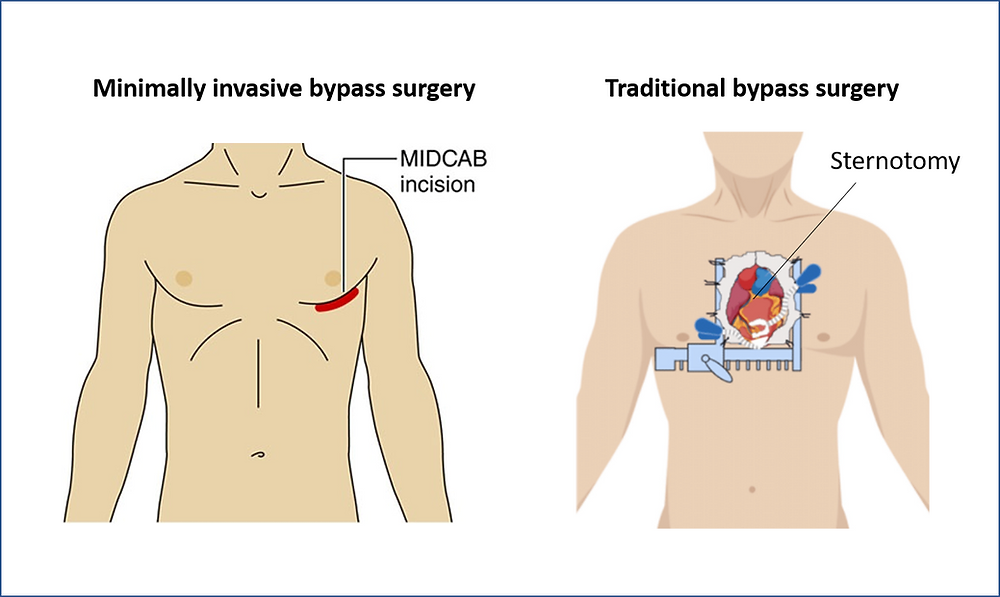
Minimally Invasive Direct Coronary Artery Bypass (MIDCAB) is a modern heart surgery technique used to treat blocked coronary arteries through a small incision on the left side of the chest, without cutting the breastbone (sternum).
Why is MIDCAB Performed?
MIDCAB is recommended for patients with:
- Blockage in the left anterior descending (LAD) artery
- Single or limited coronary artery disease
- High risk for traditional open-heart surgery
- Preference for minimally invasive treatment
It is especially beneficial when long-term durability and faster recovery are priorities.
How is MIDCAB Surgery Done?
- The patient is given general anesthesia
- A small incision (about 5–7 cm) is made between the ribs
- The internal mammary artery (IMA) is used as a graft
- The surgeon connects the artery to bypass the blocked LAD artery
- The heart continues beating throughout the procedure
The surgery typically takes 2–4 hours.
Benefits of MIDCAB Surgery
- No large chest opening (no sternotomy)
- Less pain and minimal scarring
- Faster recovery and shorter hospital stay
- Lower risk of infection
- Reduced blood loss
- Excellent long-term results for LAD blockage
Who is the Ideal Candidate for MIDCAB?
- Patients with single-vessel disease (especially LAD blockage)
- Patients not suitable for angioplasty or stenting
- Individuals at high risk for traditional bypass surgery
- Patients seeking minimally invasive options
Your cardiac surgeon will determine if MIDCAB is the right option for you.
Risks of MIDCAB Surgery
- Bleeding
- Infection
- Irregular heart rhythm
- Need to convert to open surgery (rare)
In experienced hands, MIDCAB has high success rates and excellent outcomes.
Recovery After MIDCAB
Hospital Stay: Usually 3–4 days
Full Recovery Time: Around 2–3 weeks, faster than traditional bypass surgery
Recovery Tips
- Follow medications as prescribed
- Resume light activities early
- Maintain a healthy diet
- Avoid smoking
- Attend follow-up appointments
MIDCAB vs Traditional CABG
| Feature | MIDCAB | Traditional CABG |
|---|---|---|
| Incision | Small (between ribs) | Large (chest opened) |
| Heart-Lung Machine | Not required | Usually required |
| Recovery Time | Faster | Longer |
| Pain | Less | More |
| Hospital Stay | Shorter | Longer |
Life After MIDCAB Surgery
Most patients experience relief from chest pain, return to normal life quickly, have improved heart function, and enjoy long-term benefits with proper lifestyle changes.