ECMO (Extracorporeal Membrane Oxygenation): Advanced Life Support for Critical Heart & Lung Failure
ECMO (Extracorporeal Membrane Oxygenation) is an advanced life-support system used in critically ill patients whose heart or lungs are not functioning properly.
It works like an artificial heart and lung machine, temporarily taking over their function by:
- Removing blood from the body
- Adding oxygen to it
- Removing carbon dioxide
- Pumping it back into the body
ECMO provides vital support while the body recovers or until further treatment is performed.
When is ECMO Needed?
ECMO is used in life-threatening conditions such as:
- Severe heart failure
- Severe lung failure (respiratory failure)
- Cardiac arrest
- Complications after heart surgery
- Severe infections affecting heart or lungs
- Acute respiratory distress syndrome (ARDS)
Types of ECMO
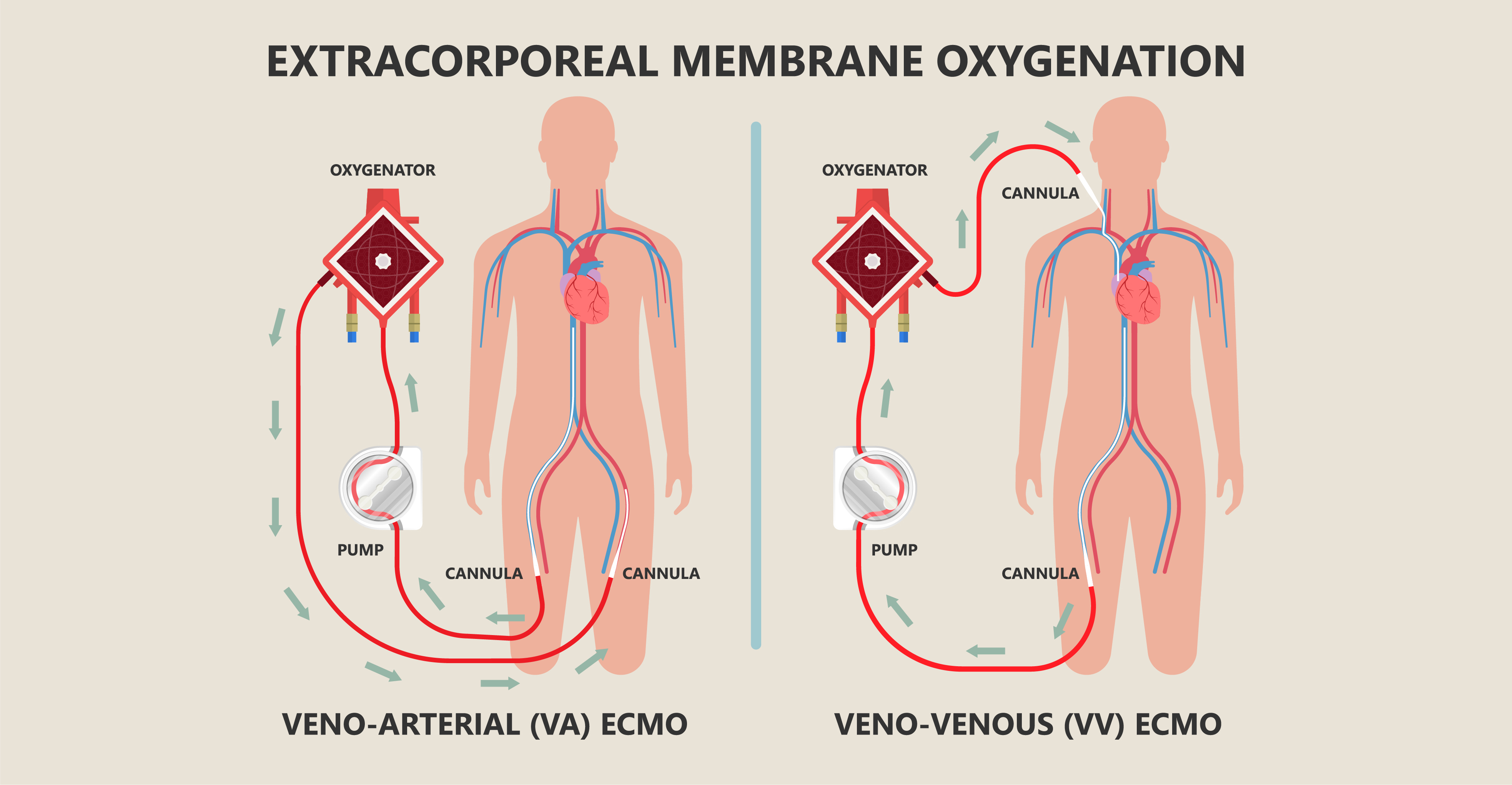
- VA-ECMO (Veno-Arterial ECMO)
Supports both heart and lung function
Used in severe heart failure or cardiac arrest - VV-ECMO (Veno-Venous ECMO)
Supports lung function only
Used in severe respiratory failure
How Does ECMO Work?
- Tubes (cannulas) are inserted into large blood vessels
- Blood is pumped into the ECMO machine
- The machine oxygenates the blood and removes carbon dioxide
- Oxygen-rich blood is returned to the body
The procedure is done in an ICU setting under expert supervision.
Benefits of ECMO
- Provides life-saving support in critical conditions
- Allows heart and lungs time to recover
- Supports patients until surgery or transplant
- Improves survival in severe cases
- Can be used in both adults and children
Who Needs ECMO?
ECMO is recommended for patients who:
- Are not responding to conventional treatments
- Have reversible heart or lung failure
- Require temporary support before major surgery or transplant
- Are critically ill but have a chance of recovery
Risks of ECMO
ECMO is a complex procedure and may involve risks such as:
- Bleeding
- Infection
- Blood clots
- Stroke
- Organ complications
Despite risks, it is often life-saving when no other options are effective.
Duration of ECMO Support
ECMO support can last from a few days to several weeks, depending on the patient’s condition and recovery.
Recovery After ECMO
Recovery depends on the underlying illness:
- Patients are gradually weaned off ECMO as heart/lung function improves
- Intensive monitoring continues in ICU
- Rehabilitation may be required after discharge
Life After ECMO
Many patients recover and return to normal life, but:
- Follow-up care is essential
- Some patients may need long-term treatment
- Recovery may take time depending on severity