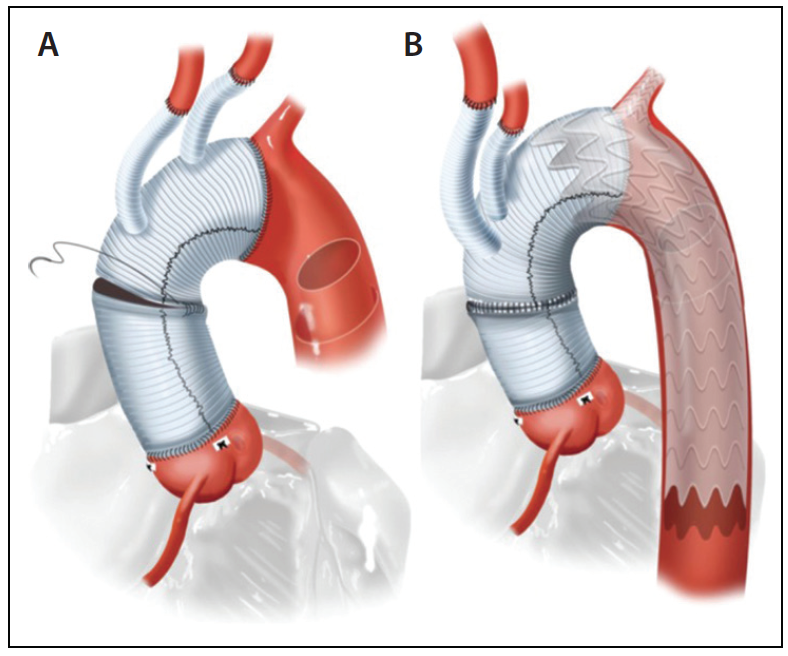
Hybrid Aortic Procedures: Advanced Treatment Combining Surgery & Endovascular Techniques
Hybrid Aortic Procedures are advanced treatments that combine traditional open-heart surgery with minimally invasive endovascular techniques to treat complex diseases of the aorta.
This approach is especially useful for patients who have extensive or complicated aortic conditions that cannot be treated effectively with a single technique alone.
Why are Hybrid Aortic Procedures Needed?
Hybrid procedures are recommended for patients with:
- Complex aortic aneurysms (thoracic or abdominal)
- Aortic dissection involving multiple segments
- Disease affecting both the aortic arch and descending aorta
- High-risk patients not suitable for full open surgery
Conditions Treated
- Thoracic Aortic Aneurysm (TAA)
- Abdominal Aortic Aneurysm (AAA)
- Aortic Dissection
- Aortic Arch Diseases
- Recurrent or previously treated aortic conditions
How is a Hybrid Aortic Procedure Performed?
The procedure is typically done in two stages or a single combined session:
- 1. Surgical Component
Open surgery is performed to reroute or bypass major arteries (debranching)
Ensures proper blood supply to vital organs - 2. Endovascular Component
A stent graft is inserted through a blood vessel (usually via the groin)
The graft reinforces the weakened aorta and seals the aneurysm or tear
Benefits of Hybrid Aortic Procedures
- Less invasive than full open surgery
- Reduced surgical trauma
- Lower risk for high-risk patients
- Shorter recovery time compared to traditional surgery
- Effective treatment for complex aortic diseases
- Improved safety and outcomes
Who is the Ideal Candidate?
Hybrid procedures are suitable for:
- Elderly or high-risk patients
- Patients with multiple aortic segments involved
- Those with previous aortic surgery
- Patients not fit for extensive open surgery
Your cardiac surgeon will evaluate your condition and decide the best approach.
Risks of Hybrid Aortic Procedures
Although advanced and safer, potential risks include:
- Bleeding
- Infection
- Stroke
- Endoleak (leak around the stent graft)
- Kidney complications
With experienced teams, outcomes are highly successful.
Recovery After Hybrid Aortic Procedures
- Hospital Stay
Typically 5–10 days - Full Recovery Time
Around 4–8 weeks, depending on the procedure
Recovery Tips
- Strict blood pressure control
- Take medications regularly
- Avoid heavy physical activity initially
- Maintain a healthy lifestyle
- Attend regular follow-ups and imaging tests
Life After Hybrid Aortic Treatment
Patients can expect:
- Improved blood flow
- Reduced risk of rupture or complications
- Better quality of life
- Need for regular monitoring to ensure graft function
| Feature | Hybrid Procedure | Open Surgery |
|---|---|---|
| Invasiveness | Less invasive | Highly invasive |
| Recovery Time | Faster | Longer |
| Risk Level | Lower (in high-risk patients) | Higher |
| Suitability | Complex/high-risk cases | Standard cases |