Aortic Dissection: Symptoms, Causes, Emergency Treatment & Recovery
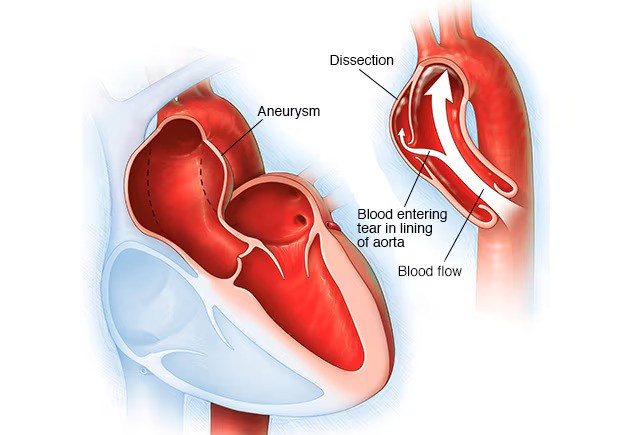
Aortic Dissection is a life-threatening condition where a tear develops in the inner layer of the aorta, the main artery carrying blood from the heart to the rest of the body. Blood flows through this tear, causing the layers of the aortic wall to separate (dissect).
If not treated immediately, it can lead to rupture, organ damage, or sudden death.
Types of Aortic Dissection
1. Type A Aortic Dissection
Involves the ascending aorta (near the heart)
Requires emergency surgery
2. Type B Aortic Dissection
Involves the descending aorta
May be treated with medication or surgery depending on severity
Causes of Aortic Dissection
Common risk factors include:
- High blood pressure (hypertension)
- Atherosclerosis (hardening of arteries)
- Connective tissue disorders (e.g., Marfan syndrome)
- Congenital heart conditions
- Trauma or injury
- Previous heart surgery
- Smoking
Symptoms of Aortic Dissection
Symptoms usually appear suddenly and are severe:
- Sudden, severe chest or upper back pain (often described as “tearing” or “ripping”)
- Pain spreading to the neck, jaw, or abdomen
- Shortness of breath
- Loss of consciousness
- Weak pulse or difference in blood pressure between arms
- Stroke-like symptoms
When Should You Seek Emergency Help?
Call emergency services immediately if you experience:
- Sudden severe chest or back pain
- Fainting or dizziness
- Difficulty breathing
- Symptoms of stroke
Diagnosis of Aortic Dissection
Doctors use urgent imaging tests such as:
- CT Scan (CT Angiography) – Most common and accurate
- Echocardiography (TEE) – Quick bedside evaluation
- MRI Scan – Detailed imaging (in stable patients)
- Chest X-ray – Initial assessment
Treatment Options
1. Emergency Surgery (Type A)
- Removal of the damaged section of the aorta
- Replacement with a synthetic graft
- Repair or replacement of the aortic valve (if needed)
2. Medical Management (Type B)
- Strict control of blood pressure
- Pain management
- Close monitoring in ICU
3. Endovascular Repair (TEVAR)
- A minimally invasive procedure using a stent graft
- Inserted through blood vessels to repair the aorta
Benefits of Early Treatment
- Saves life in emergency situations
- Prevents rupture and complications
- Restores normal blood flow
- Improves long-term survival
Risks and Complications
If untreated, aortic dissection can cause:
- Aortic rupture
- Stroke
- Heart failure
- Organ damage
- Death
Recovery After Aortic Dissection Treatment
Hospital Stay
Typically 7–14 days, depending on severity
Full Recovery Time
Around 6–12 weeks or longer
Recovery Tips
- Strict blood pressure control
- Take medications regularly
- Avoid heavy physical activity
- Follow a heart-healthy lifestyle
- Attend regular follow-ups
Life After Aortic Dissection
Patients can live a normal life with:
- Controlled blood pressure
- Healthy diet and exercise
- Avoidance of smoking and stress
- Regular imaging tests to monitor the aorta